

The severities of hamstring strains or pulled hamstrings differ. In some cases, the discomfort may be dull, but in others, the pain is excruciating. The important thing is to listen to your body and give your hamstring the attention it needs to heal safely.
This post provides everything you need to know about ways to treat your hamstring strain symptoms as you contribute to the natural healing process.
What is a Pulled Hamstring?
Whether you lead an active or sedentary lifestyle, your hamstrings are vital to your daily activities. When the hamstring is stretched too far or suddenly has a high amount of pressure placed upon it, it becomes strained due to muscle overload.
There are three grades of hamstring strains that increase in severity.
- A grade I strain involves minimal fiber damage and is mild in nature
- A grade II strain is a partial tear, usually up to 50% of the fibers of the muscle.
- A grade III strain is a complete tear and is the most severe version of the injury. These tears may require surgery to repair.
Common reasons for a hamstring strain include:
- Improper warm-ups before physical activity
- A sudden, violent or powerful movement
- Actions such as sprinting, jumping, lunging, climbing
- A traumatic accident, such as a car accident or sports accident
A healthy hamstring supports several movements, including:
- Hip extension, such as for jumping, running, climbing stairs, and moving from sitting to standing
- Knee flexion, such as for kneeling, squatting, lunging, and sitting
- Knee joint stabilization; important for keeping the joint aligned and protected from musculoskeletal disorders
- Hip joint stabilization; for helping control your hips through movement, and when you move other parts of the body
- Pelvis tilting; important for extending and rotating your spine
- Leg rotation, such as for balance, weight transfer, and stride length
Because we rely on our hamstrings so much, both while moving and while inactive, they’re at risk for injury, and anyone at any age may experience it.
Here’s how we at M3 manage a hamstring strain — from the first evaluation to a safe return to play.
Hamstring Strains: Diagnosis
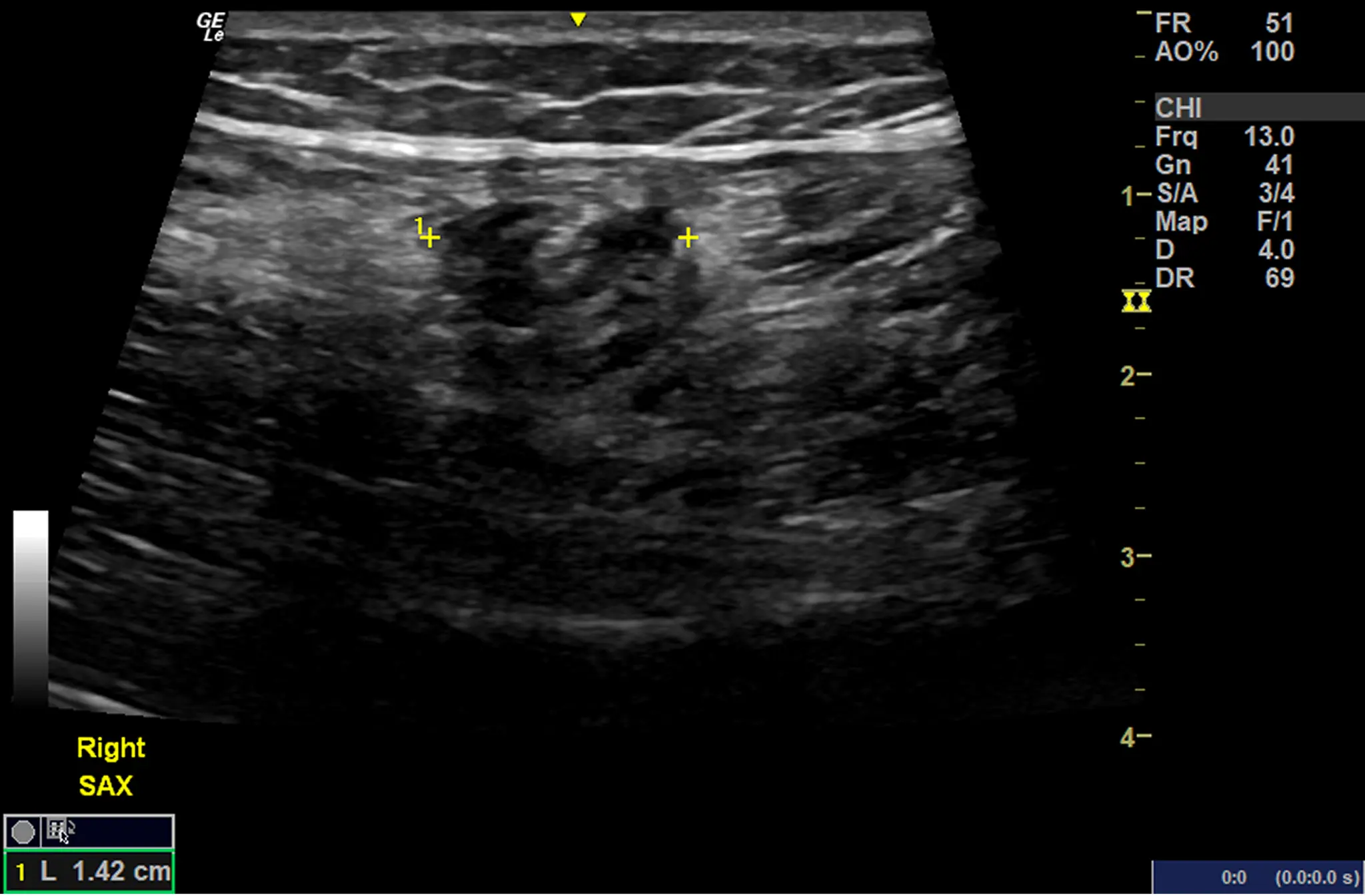
Traditionally, hamstring injuries are diagnosed based on history, palpation, and clinical tests. While these are still essential, we also use diagnostic musculoskeletal ultrasound imaging which allows us to: Visualize the injured tissue in real time, Identify the grade of the strain (mild, partial tear, or full tear), Determine the exact location (e.g., proximal tendon vs. muscle belly vs. musculotendinous junction), and rule out other causes of posterior thigh pain (e.g., sciatic nerve irritation or referred pain from the low back)
Objective Testing
After we perform our exam, we will commonly perform testing to safely assess differences in strength from healthy to unhealthy side. This is accomplished with force plates from Hawkin Dynamics and our Voltra I from Beyond Power which enable us to see force production and obtain hard numbers that can be used assess progress and return to play as you progress through care.
Treatment Options for Hamstring Strains
Once we have a diagnosis, we create a tailored treatment plan. Treatment evolves as healing progresses, but early intervention focuses on reducing pain, normalizing basic function, and maintaining mobility.
As we move to Phase 2 we integrate treatments that promote blood flow, tissue remodeling and begin strength training to promote motor control and range of motion. Treatments at M3 include:
- Soft tissue therapy: Active Release Techniques, Graston/IASTM, Cupping and other Myofascial mobilization techniques
- Class IV laser therapy to enhance healing at the cellular level.
- Focused Shockwave therapy which is a type of ultrasound that uses acoustic pressure waves to stimulate healing in soft tissues, reduce pain, and break up scar tissue or adhesions.
- BFR (Blood Flow Restriction) training: Low-load strength work that delivers increased gains in muscle hypertrophy while minimizing strain on the hamstring.
- Core and pelvic stability work to reduce compensations and aberrant movement patterns that may delay healing or create new injuries.
In Phase 3 our focus turns to rebuilding strength, ensuring proper mechanics and returning to play for your specific sport or activity. Our force testing is especially important during this phase so that we can ensure that we’re sending you back to the field better than before your injury.
Work with M3 Chiropractic & Sports Medicine for Safe Hamstring Strain Healing
You deserve to live pain-free, knowing that your body will support the demands placed on it. Working with our Atlanta chiropractors will give you peace of mind, knowing that the best healing strategy is in place. We understand what it takes to efficiently get your hamstring strain remedied with lasting results. Our team will also provide insight into your lifestyle to enhance the in-clinic chiropractic care you receive.
We offer several services to treat a hamstring sprain in our Atlanta chiropractic clinic, including:
- Chiropractic adjustments or spinal manipulations
- Active Release Technique (ART)
- Graston Technique
- Class IV laser therapy
- Blood flow restriction therapy
- Rehabilitative exercise
- RockTape
- Activity modification advice
- And others
When you’re ready to reclaim your quality of life with confidence, we’re here to help you reach your wellness goals with a unique healing strategy based on your needs.
Let Dr. Drew and Dr. Paul give you the tools to heal your body and keep it protected moving forward. Contact us today to get started.
