

Importance of a Warm-Up, Especially When Starting Something New
With the New Year upon us, many people are either returning to the gym or starting a fitness routine for the first time. Starting something new—or returning after a long break—places unfamiliar demands on the body. Muscles, tendons, ligaments, and joints rely on gradual exposure to load to become stronger and more resilient. When someone begins a new routine—particularly one involving unfamiliar movements, higher intensity, or increased frequency—these tissues may be asked to perform beyond their current capacity.
Even exercises that look simple should be eased into. Without proper preparation, these sudden demands can overwhelm tissues that aren’t yet conditioned, leading to soreness, frustration, or injury that interrupts progress before it really begins.
Warm-ups are often skipped due to time constraints or misunderstood as wasted effort, but they play a critical role in easing the transition from rest to movement—especially when the body is adjusting to new stresses. Taking a few intentional minutes before exercising can be the difference between building momentum and being sidelined early in the process.
What Happens During a Proper Warm-Up
A proper warm-up gradually increases blood flow, body temperature, and joint mobility through light cardio and movements that mirror the workout ahead. The goal is to transition the body from rest to activity so you feel loose, focused, and prepared—warm, but not fatigued. As temperature rises, blood flow to the muscles improves, delivering oxygen and nutrients while making muscles and connective tissues more elastic and less stiff. This allows for smoother, more efficient movement and better control during exercise.
A proper warm-up also prepares the joints and nervous system for exercise (1). Progressive, controlled motions improve joint range of motion and speed up nerve signaling, enhancing coordination, balance, and reaction time. This neuromuscular readiness is especially important for new or complex exercises—without it, the body often compensates by shifting stress to areas not designed to handle it, increasing the risk of strains or overuse injuries in the shoulders, hips, knees, and lower back.
How Cold Weather Effects Your Warm-Up
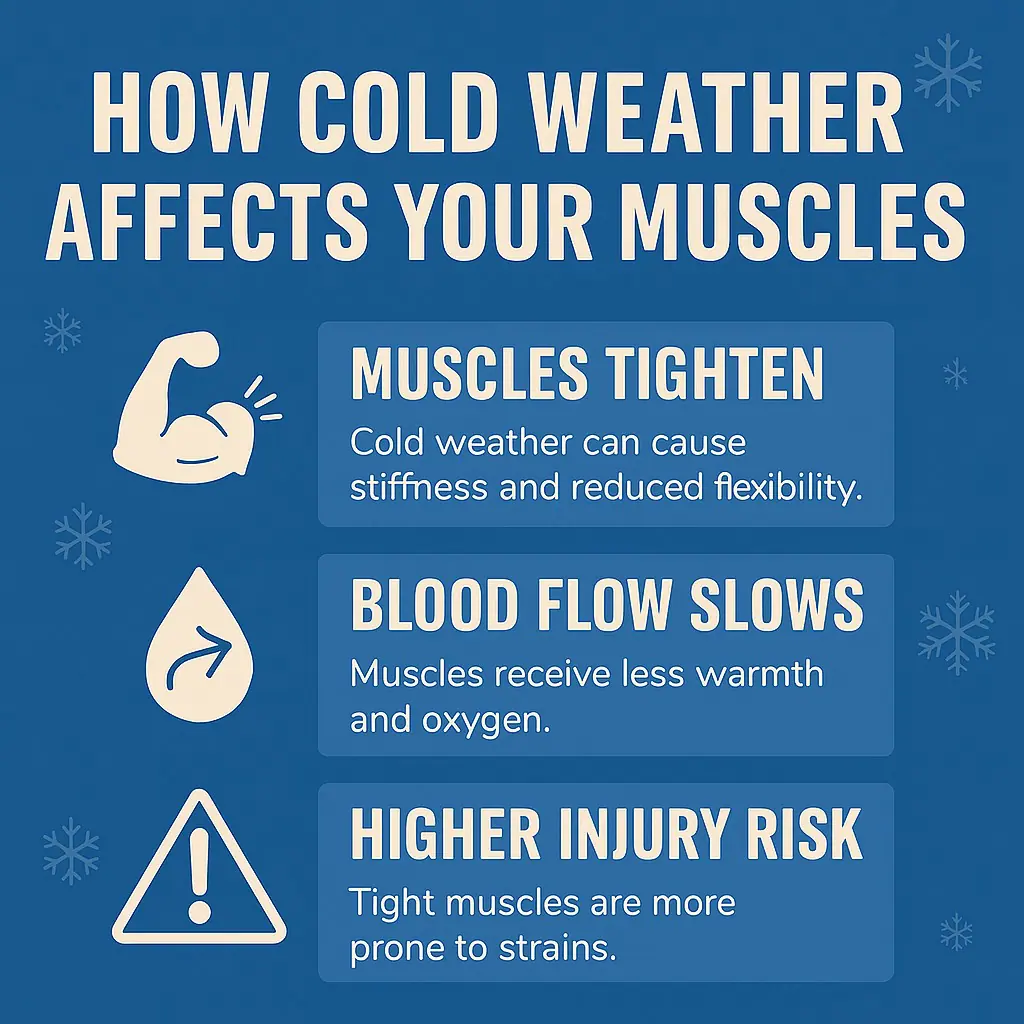
As we head into winter, cold weather lowers both skin and muscle temperature, which can increase stiffness in muscles, tendons, and joints. In colder environments, a proper warm-up is not optional—it is necessary to prepare the body for safe and effective movement. Cold tissues are less elastic and less able to handle sudden or high forces, increasing the risk of strains, pulls, and joint irritation (2).
A longer and more intentional warm-up in winter helps restore tissue elasticity and improve circulation before training begins. Gradually increasing body and muscle temperature improves movement quality, coordination, and comfort—especially during outdoor or early-morning workouts.
Common Warm-Up Mistakes to Avoid
Even a well-intentioned warm-up can go wrong if not done properly. Skipping it entirely leaves muscles and joints unprepared, increasing the risk of strains and poor movement patterns. Relying solely on static stretching is another common mistake, as stretching alone doesn’t raise body temperature or activate muscles effectively. Warming up too quickly or too aggressively can fatigue muscles before the workout begins. The ideal warm-up should gradually increase heart rate, body temperature, and joint mobility without causing fatigue or soreness. A good rule of thumb is to feel warm, slightly challenged, and ready to move—never tired—before starting your workout.
Warming up appropriately prepares muscles, joints, and the nervous system for activity, reducing injury risk and improving performance. Under-warming leaves tissues stiff and unprepared, while over-warming can cause early fatigue and decrease strength and power during exercise.
Warm-Ups as an Investment in Long-Term Progress
Warm-ups are a small but essential part of any exercise program. Taking the time to prepare the body improves movement quality, reduces injury risk, and sets the stage for consistent progress. Rather than viewing a warm-up as extra or optional, reframe it as an active form of injury prevention—an investment in keeping your body healthy and performing at its best. By making warm-ups a regular habit, you protect your body and maximize the benefits of every workout.
Key Take Aways for Staying Injury Free
Some final tips to reduce the risk of injury when starting a new exercise program include beginning gradually and prioritizing consistency over intensity. Adjust the length and intensity of your warm-up based on the activity and environmental conditions, such as cold weather or outdoor workouts. Pay attention to early warning signs like lingering soreness, stiffness, or asymmetry, and don’t ignore them.
If pain or discomfort persists, seeking guidance from a qualified professional can help prevent minor issues from becoming more serious—Dr. Drew and Dr. Paul at M3 Chiropractic & Sports Medicine are available to evaluate your concerns and help keep you training safely and confidently.
Works Cited
- Afonso J, Brito J, Abade E, Rendeiro-Pinho G, Baptista I, Figueiredo P, Nakamura FY. Revisiting the ‘Whys’ and ‘Hows’ of the Warm-Up: Are We Asking the Right Questions? Sports Med. 2024 Jan;54(1):23-30. doi: 10.1007/s40279-023-01908-y. Epub 2023 Sep 2. PMID: 37658965; PMCID: PMC10798919.
- Farbu EH, Höper AC, Reierth E, Nilsson T, Skandfer M. Cold exposure and musculoskeletal conditions; A scoping review. Front Physiol. 2022 Sep 1;13:934163. doi: 10.3389/fphys.2022.934163. PMID: 36117709; PMCID: PMC9475294.
