
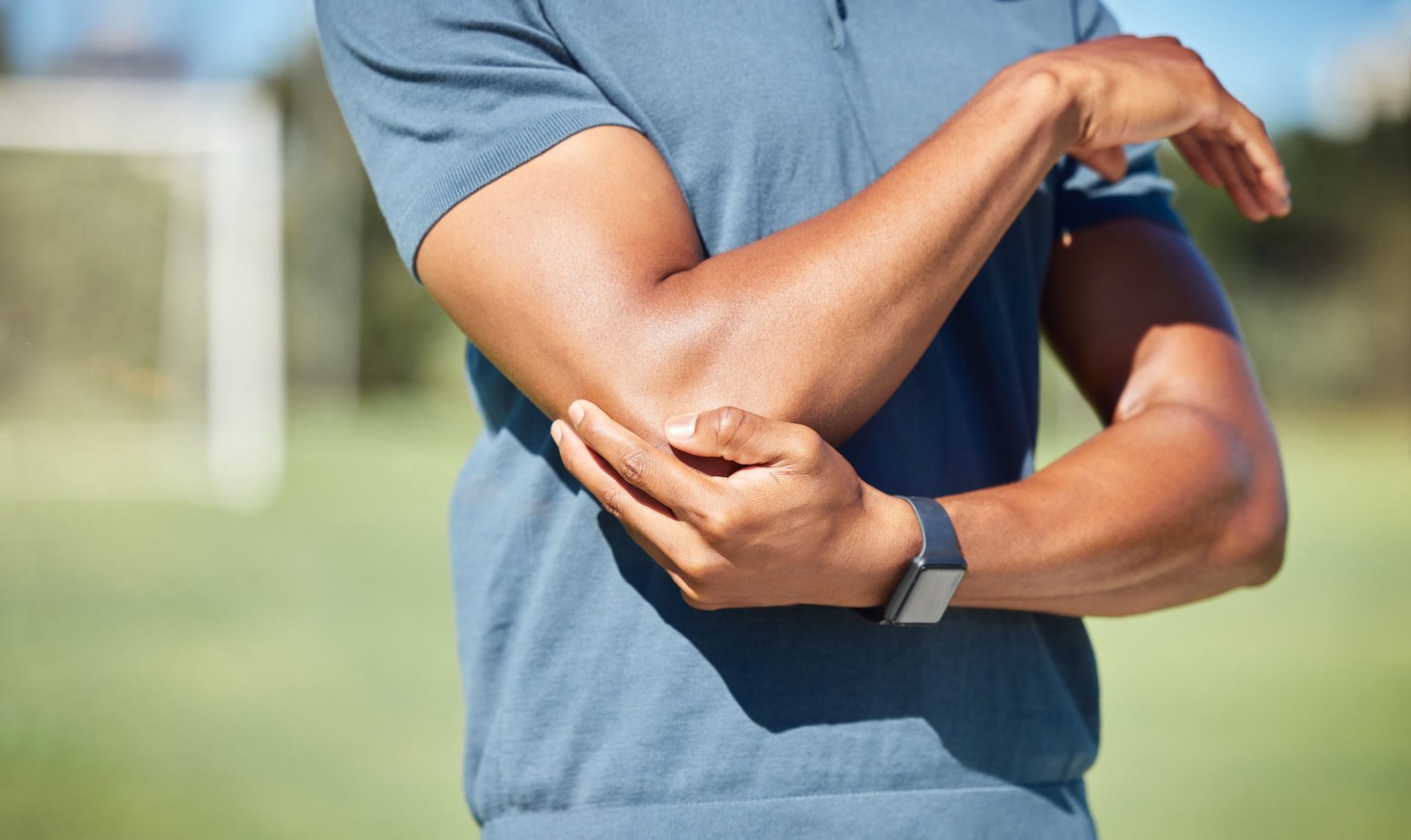
Pain when gripping a coffee cup, turning a doorknob, or lifting at the gym? You might be dealing with tennis elbow or golfer’s elbow—two common but highly treatable causes of elbow pain.
Tennis elbow and golfer’s elbow are two of the most common causes of elbow pain1, especially among active adults, athletes, and individuals who perform repetitive arm and hand movements for work. While the condition can be frustrating and persistent, it is highly treatable with the right combination of hands-on care, progressive loading, and movement optimization.
Elbow Anatomy
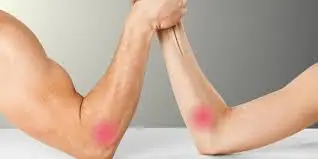
The pain associated with tennis and golfer’s elbow comes from tendons that attach to small bony prominences on the elbow called epicondyles.
The lateral epicondyle (outside of the elbow) is where the wrist extensor tendons attach.
The medial epicondyle (inside of the elbow) is where the wrist flexor tendons attach.
These muscle groups play a key role in gripping, lifting, and controlling wrist motion. Because they are used so frequently in both sports and daily life, they are especially vulnerable to overload.
What Is Tennis Elbow / Golfer’s Elbow?
Despite the common names, these conditions are not limited to tennis players or golfers. In fact, they are often more common in individuals such as mechanics, electricians, plumbers, and office workers who perform repetitive gripping or wrist movements.
The traditional terms lateral and medial epicondylitis suggest inflammation (“-itis”), but current research shows that these conditions are more accurately described as tendinopathies—a degenerative process rather than a purely inflammatory one.
This means the tendon undergoes:
- Micro-damage from repeated stress
- Disorganization of collagen fibers
- Reduced ability to tolerate load
Because of this, many clinicians now use the terms: lateral elbow tendinopathy (tennis elbow) and medial elbow tendinopathy (golfer’s elbow).
This distinction is important because it changes how we treat the condition. Instead of relying solely on anti-inflammatory approaches, modern treatment focuses on improving the tendon’s ability to handle load through progressive strengthening and movement correction.
What Is Tendinopathy?
Tendinopathy, regardless of location, can be simplified to one concept: the load placed on the tendon exceeds its current capacity.
This typically occurs through repetitive microtrauma. For example:
- Repeated gripping and wrist extension movements in a mechanic
- Frequent golf swings after a period of inactivity
- Sudden increase in gym training volume (starting a New Year’s resolution)
While these are just common examples, the commonality between the groups is that over time, this mismatch between load and capacity leads to pain and dysfunction. This same principle applies to other conditions like Achilles tendinopathy and plantar fasciopathy.
Who Gets Tennis or Golfer’s Elbow?
These conditions commonly affect two main groups:
- Active individuals and athletes — tennis players, golfers, baseball players, and gym-goers, often due to rapid increases in training volume or intensity
- Workers with repetitive upper extremity demands — electricians, plumbers, mechanics, and desk workers due to repetitive gripping, lifting, or typing tasks
Although these groups differ, the underlying issue is the same: the tendon is being asked to do more than it is prepared for.
Do I Have Tennis or Golfer’s Elbow?
Both conditions present with a fairly recognizable pattern:
- Pain localized to the inside (medial) or outside (lateral) of the elbow
- Pain with gripping, lifting, or wrist movements
- Tenderness when pressing on the epicondyle
- A recent increase in activity or workload
- Symptoms that may warm up with activity but worsen afterward
Is Imaging Necessary?
Imaging is not always required to diagnose medial or lateral epicondyle tendinopathy, as the condition is primarily identified through a thorough clinical history and physical examination. In most cases, the pattern of symptoms and exam findings provide enough information to confidently make a diagnosis.
Common imaging options include: Ultrasound is often a great first option because it is quick, cost-effective, and allows for real-time evaluation of the tendon’s structure and thickness. MRI provides a more detailed view of the soft tissues and may be used in more persistent or complex cases, though it is typically not necessary early on.
Prognosis
The outlook for medial and lateral elbow tendinopathy is generally very positive, especially with the right treatment approach. These conditions are highly manageable, and most individuals are able to return to their normal activities without long-term limitations.
That said, tendon-related injuries can take time to fully resolve. Many patients notice meaningful improvement within a few months, particularly when they follow a structured rehabilitation program that focuses on progressive loading and activity modification. In some cases, symptoms may linger longer, especially if the condition has been present for an extended period before treatment begins.
While the timeline can vary, the most important takeaway is that symptoms typically become much more manageable well before they completely disappear. With consistent care, proper load management, and targeted strengthening, most people are able to regain function, reduce pain, and return to work, training, and sport with confidence.
Treatment
1. Progressive Strengthening (The Foundation)
The most effective long-term treatment focuses on building the tendon’s capacity to handle load.2
Early-stage exercises often include:
- Isometric holds (e.g., hammer holds, ball squeezes)
- Slow, controlled resistance exercises
- Wrist curls and extensions
- Pronation/supination work
As symptoms improve, rehab progresses to:
- Heavier resistance training
- Functional and sport-specific movements
- Plyometric or dynamic loading (for athletes)
2. Load Management
A key part of recovery is finding the “Goldilocks zone”—the balance between not too much load (which worsens symptoms) and not too little load (which reduces capacity).
Completely avoiding movement for long periods can actually delay recovery, as the tendon becomes less tolerant to stress.
3. Supportive Treatments
To complement strengthening:
- Manual therapy to the forearm, elbow, and shoulder
- Soft tissue work (Active Release Technique, Graston, cupping)
- Mobility work for the wrist, elbow, and thoracic spine
- Improving shoulder and scapular strength and control
Lifestyle factors also matter:
- Sleep quality
- Nutrition (adequate protein and vitamin C intake)3
- Stress management
4. Extracorporeal Shockwave Therapy (ESWT)
Shockwave therapy has strong evidence as an adjunct treatment for tendinopathies.4 It can:
- Reduce pain
- Stimulate tissue healing
- Improve function
At M3 Chiropractic & Sports Medicine, we often combine ESWT with progressive rehab to accelerate recovery and address stubborn cases.
Pain Guidelines During Rehab
Some discomfort during rehab is normal and even expected.
Generally acceptable if:
- Pain ≤ 3–4/10
- Pain decreases as you warm up
- No significant flare-up the next day
Discontinue exercises if:
- Sharp or worsening pain (>5/10)
- Pain that increases with each repetition
- Significant next-day flare-ups
Common Mistakes
Letting a tendon rest completely for too long can actually make it weaker, while jumping back into activity too quickly can increase irritation. Skipping gradual strengthening often leads to the pain coming back again. The key to recovery is finding a middle ground—slow, steady, and consistent loading rather than extremes.
Our Approach at M3 Chiropractic & Sports Medicine
At M3 Chiropractic & Sports Medicine, we take a comprehensive, individualized approach to elbow pain. We don’t just treat the symptoms—we identify the underlying causes of tendon overload and build a plan around your lifestyle, work demands, and training goals.
By combining:
- Hands-on care
- Targeted rehabilitation
- Load management strategies
- Advanced therapies like shockwave
We help you not only reduce pain, but build long-term resilience so you can return to work, training, and sport with confidence.
If you’re dealing with ongoing elbow pain, don’t wait for it to become more limiting. At M3 Chiropractic & Sports Medicine, we’ll help you identify the root cause and build a clear plan to get you back to full strength. Schedule an evaluation today and take the first step toward lasting relief.
References
- Rineer CA, Ruch DS. Elbow tendinopathy and tendon ruptures: epicondylitis, biceps and triceps ruptures. J Hand Surg Am. 2009 Mar;34(3):566-76. doi: 10.1016/j.jhsa.2009.01.022. PMID: 19258160.
- Peterson M, Butler S, Eriksson M, Svärdsudd K. A randomized controlled trial of exercise versus wait-list in chronic tennis elbow (lateral epicondylosis). Ups J Med Sci. 2011 Nov;116(4):269-79. doi: 10.3109/03009734.2011.600476. PMID: 22066975; PMCID: PMC3207303.
- Aussieker T, Kaiser J, Hermans WJH, et al. Ingestion of a Whey Plus Collagen Protein Blend Increases Myofibrillar and Muscle Connective Protein Synthesis Rates. Medicine & Science in Sports & Exercise. 2025 Mar;57(3):544-554. doi: 10.1249/MSS.0000000000003596.
- Liu WC, Chen CT, Lu CC, et al. Extracorporeal Shock Wave Therapy Shows Superiority Over Injections for Pain Relief and Grip Strength Recovery in Lateral Epicondylitis: A Systematic Review and Network Meta-analysis. Arthroscopy. 2022 Jun;38(6):2018-2034.e12. doi: 10.1016/j.arthro.2022.01.025. PMID: 35093494.