
For many years, women were told to avoid lifting weights. Some were told it would make them bulky. Others were warned that it would wear out their joints or that cardio was all they needed to stay healthy. Fortunately, our understanding of exercise and aging has come a long way, and much of that advice simply doesn’t hold up to what the research shows today.
One thing we do know is that every woman will experience changes in her body as she gets older. Muscle mass gradually decreases, bone density begins to decline, and everyday activities that once felt effortless can slowly become more difficult. These changes are a normal part of aging, but they don’t have to dictate how you age.
One of the most effective ways to slow many of these changes is surprisingly simple: lift weights.
Strength training isn’t just for athletes or bodybuilders. It’s one of the best investments you can make in your future health, helping you stay active, independent, and capable of doing the things you enjoy for years to come.
Muscle Loss Is Normal, but Weakness Doesn’t Have to Be
Beginning around the age of 30, everyone starts to gradually lose muscle mass. This process is known as sarcopenia, and while it happens to both men and women, women often experience a more rapid decline after menopause as estrogen levels decrease.1
Most people associate estrogen with reproductive health, but its effects extend far beyond that. Estrogen helps maintain bone density, supports muscle function, and influences how our bodies regulate energy and temperature. As estrogen levels decline during menopause, women commonly notice decreased muscle strength, increased fatigue, changes in body composition, and accelerated bone loss.2
These changes are completely normal, but they’re often misunderstood. Many people assume they’re simply an unavoidable consequence of getting older and that there’s very little they can do about them.
Fortunately, that’s not the case.
The human body is incredibly adaptable. Even later in life, muscles and bones continue responding to the demands we place on them. When we stop challenging them, they gradually become weaker. When we continue asking them to work, they adapt by becoming stronger.
Why Strength Training Matters
Most people think lifting weights is about building bigger muscles, but that’s only part of the story.
Every time you perform a squat, push-up, row, or deadlift, your muscles experience mechanical stress. Your body responds by repairing those muscles so they become stronger and better prepared for the next challenge. This process doesn’t just happen in your muscles, though. The force created by those muscles also places stress on your bones, signaling them to maintain and build bone tissue.
This relationship between muscles and bones is one of the reasons resistance training becomes increasingly important as we age.
Unlike many forms of exercise, strength training helps address two of the biggest physical changes associated with aging: the gradual loss of muscle mass and the gradual loss of bone density. While aging itself can’t be stopped, resistance training is one of the few interventions shown to slow both processes.3
That’s important because stronger muscles don’t just help you lift heavier weights. They make everyday life easier. Standing up from a chair, climbing stairs, carrying groceries, picking up your grandchildren, and maintaining your balance all become easier when your muscles remain strong.
The Benefits Go Far Beyond Muscle
One of the biggest misconceptions about strength training is that it’s only about appearance.
In reality, stronger muscles affect nearly every system in the body.
Research has consistently shown that regular resistance training can help improve blood pressure, support healthy blood sugar regulation, assist with weight management, improve sleep quality, reduce symptoms of anxiety and depression, and even enhance cognitive function.
Strength training also improves balance and coordination, two things that become increasingly important later in life. Better balance means fewer falls, and fewer falls mean fewer fractures and hospitalizations.4
The benefits of lifting weights extend far beyond looking stronger. They help you function better.5,6
It’s About Healthspan, Not Just Lifespan
Modern medicine has become incredibly good at helping us live longer. That is amazing, but now the question is how we want to spend those extra years. Think about your final decade of life and what it will look like.
Do you want to travel? Play with your grandchildren? Work in your garden? Go hiking? Carry your own groceries? Get down on the floor and back up again without needing help?
Or would you rather spend those years limited by weakness, poor balance, chronic pain, and loss of independence?
This is the difference between lifespan and healthspan. Lifespan refers to how long we live. Healthspan refers to how long we remain healthy enough to enjoy life. Every workout is an investment in your future self. You’re not simply exercising for today. You’re building the strength you’ll rely on ten, twenty, or even thirty years from now. Resistance training is one of the best strategies to increase healthspan.7
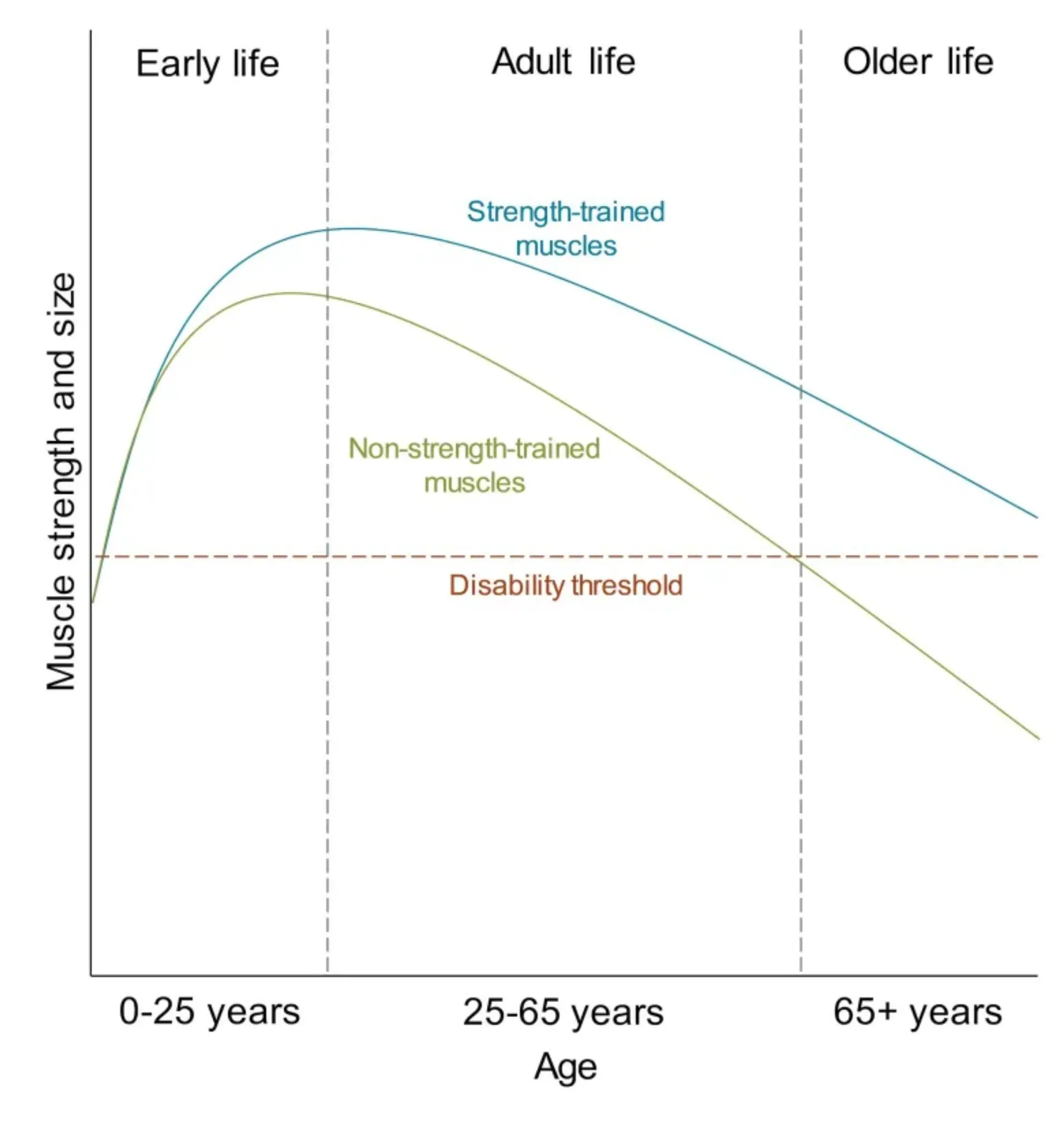
Every woman will experience some loss of bone density after menopause, and that’s simply part of the aging process, but the amount of bone and muscle you have before that decline begins can be very different. Think of it as starting from a higher point on the graph. While resistance training can’t completely prevent age-related changes, it can help build and preserve muscle and bone throughout adulthood, giving you more reserve as you age. Rather than trying to stop the aging process, the goal is to age from a stronger starting point.
Common Myths About Women and Strength Training
Despite the growing body of research supporting resistance training, many women are still hesitant to lift weights. In many cases, that hesitation comes from previous advice they’ve heard—whether from family members, friends, magazines, or even healthcare providers. While these recommendations were often well-intentioned, much of what we believed about women and strength training has changed as the research has evolved.
One of the most common concerns is that lifting weights will damage the joints. Fortunately, the evidence suggests the opposite.8 When performed with proper technique and appropriate progression, resistance training strengthens the muscles surrounding the joints, helping them better absorb and distribute forces. Research has consistently shown improvements in pain and function among individuals with osteoarthritis who participate in appropriately prescribed strength training programs.
Another concern is that lifting weights will make women bulky. While resistance training certainly helps build muscle, developing the amount of muscle often associated with bodybuilding requires years of dedicated training, nutrition, and hormonal influences that most women simply don’t have. For the vast majority of women, lifting weights leads to greater strength, improved body composition, and better physical function—not excessive muscle size.
Many women also believe they’re simply too old to start. This may be the biggest misconception of all. Study after study has shown that older adults—including women well into their seventies and eighties—can improve muscle mass, strength, balance, and overall function after beginning a resistance training program. Our bodies remain remarkably adaptable throughout life.
Finally, it’s worth mentioning that many women believe cardio is a sufficient form of exercise, especially if they add the trendy “weight vest” to their walks. Walking (even with a weight vest) and other forms of cardio are excellent for your health, and they absolutely deserve a place in a well-rounded exercise routine. However, they don’t provide the same stimulus needed to build muscle or preserve bone density. Rather than choosing one over the other, the goal should be to include both aerobic exercise and resistance training as part of a healthy lifestyle.
Getting Started Doesn’t Have to Be Complicated
After learning about the many benefits of strength training, the next question many women have is: “Where do I start?” The answer is simpler than most people think. You do not need a perfect workout routine, hours in the gym, or years of experience to begin building strength. The most important factor is consistency.
The updated recommendations from the American College of Sports Medicine (ACSM) emphasize that movement is the priority. Doing something is always better than doing nothing, and small amounts of consistent activity can create meaningful improvements over time. For most adults, the goal should be to incorporate resistance training at least two days per week while also staying active throughout the day.9
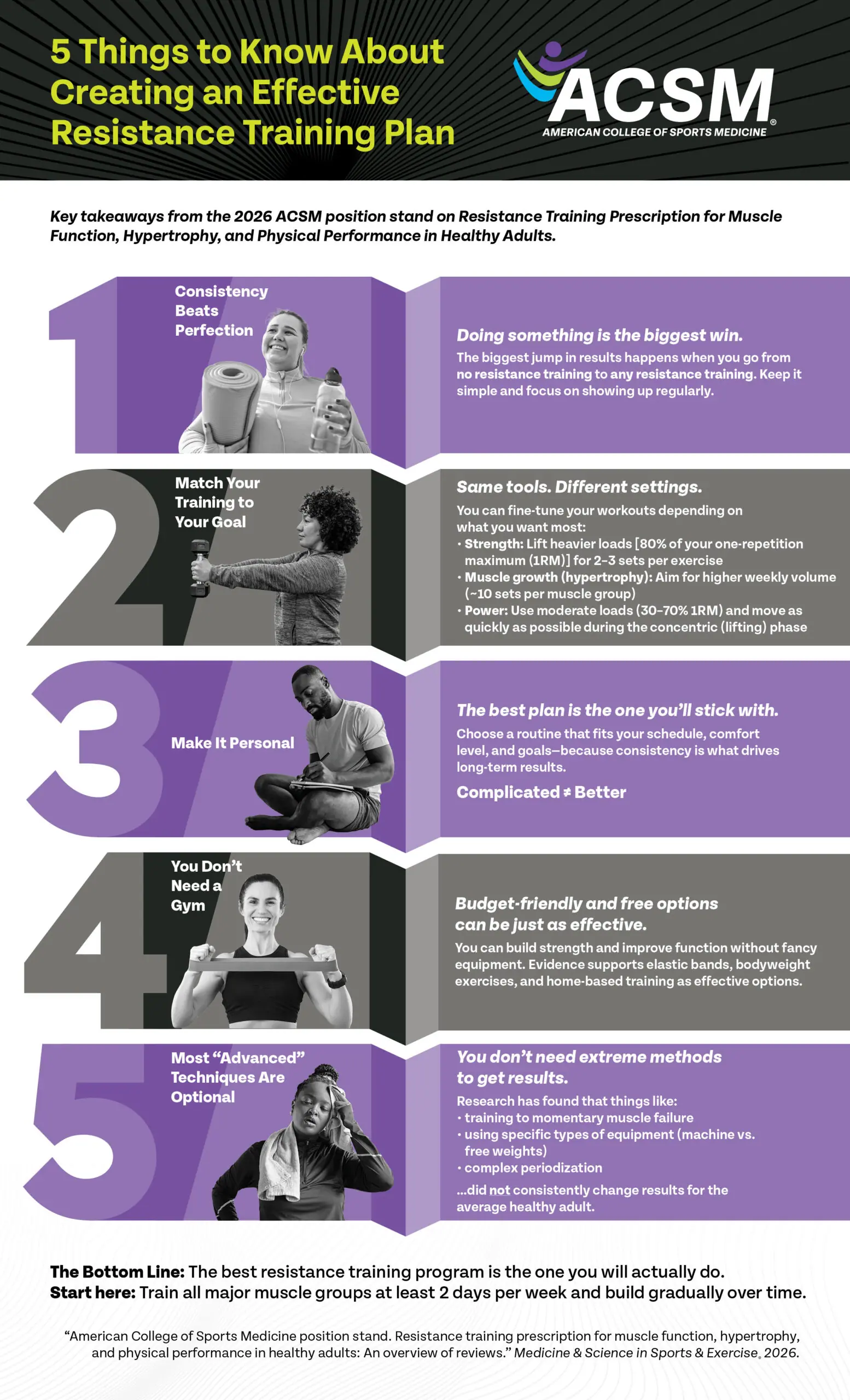
Strength training does not have to be complicated. Start with the basics, focus on movements that build strength and confidence, and gradually progress as your body adapts. For older adults, incorporating aerobic exercise, balance training, and coordination exercises can further support independence and quality of life.10
The goal is not perfection—the goal is progress. Building strength is a lifelong journey, and the best time to start is today.
Final Thoughts
Getting older is something we all experience. Losing your ability to do the things you love does not have to be.
Strength training is an investment in the future version of yourself. It allows you to build the muscle, confidence, and resilience needed to continue living an active and independent life.
The best exercise program is the one you can consistently perform. Start where you are, progress at your own pace, and remember that every step forward matters. It is never too late to become stronger.
If pain or uncertainty has kept you from strength training, M3 Chiropractic & Sports Medicine is here to help. Our goal is to help you move more, move better, and move pain-free by overcoming barriers, building confidence, and creating a plan that allows you to stay active for years to come.
References
- Nishikawa H, Fukunishi S, Asai A, Yokohama K, Nishiguchi S, Higuchi K. Pathophysiology and mechanisms of primary sarcopenia (Review). Int J Mol Med. 2021 Aug;48(2):156. doi: 10.3892/ijmm.2021.4989. Epub 2021 Jun 29. PMID: 34184088.
- Lu L, Tian L. Postmenopausal osteoporosis coexisting with sarcopenia: the role and mechanisms of estrogen. J Endocrinol. 2023 Sep 11;259(1):e230116. doi: 10.1530/JOE-23-0116. PMID: 37523234.
- Morin SN, Feldman S, Funnell L, Giangregorio L, Kim S, McDonald-Blumer H, Santesso N, Ridout R, Ward W, Ashe MC, et al.; Osteoporosis Canada 2023 Guideline Update Group. Clinical practice guideline for management of osteoporosis and fracture prevention in Canada: 2023 update. CMAJ. 2023 Oct 10;195(39):E1333-E1348. doi: 10.1503/cmaj.221647. PMID: 37816527; PMCID: PMC10610956.
- National Institute on Aging. Health benefits of exercise and physical activity [Internet]. Bethesda (MD): National Institutes of Health; 2025 Jan 14 [cited 2026 Jul 13]. Available from: https://www.nia.nih.gov/health/exercise-and-physical-activity/health-benefits-exercise-and-physical-activity
- Maestroni L, Read P, Bishop C, Papadopoulos K, Suchomel TJ, Comfort P, Turner A. The Benefits of Strength Training on Musculoskeletal System Health: Practical Applications for Interdisciplinary Care. Sports Med. 2020 Aug;50(8):1431-1450. doi: 10.1007/s40279-020-01309-5. PMID: 32564299.
- Jagim AR. The many benefits of resistance training as you age. Mayo Clinic Press. September 27, 2024. Accessed July 13, 2026. https://mcpress.mayoclinic.org/healthy-aging/the-many-benefits-of-resistance-training-as-you-age/
- Guan Y, Yan Z. Molecular Mechanisms of Exercise and Healthspan. Cells. 2022 Mar 3;11(5):872. doi: 10.3390/cells11050872. PMID: 35269492; PMCID: PMC8909156.
- Lim J, Choi A, Kim B. The Effects of Resistance Training on Pain, Strength, and Function in Osteoarthritis: Systematic Review and Meta-Analysis. J Pers Med. 2024 Nov 30;14(12):1130. doi: 10.3390/jpm14121130. PMID: 39728043; PMCID: PMC11676110.
- Currier BS, D’Souza AC, Singh MAF, Lowisz CV, Rawson ES, Schoenfeld BJ, Smith-Ryan AE, Steen JP, Thomas GA, Triplett NT, Washington TA, Werner TJ, Phillips SM. American College of Sports Medicine Position Stand. Resistance Training Prescription for Muscle Function, Hypertrophy, and Physical Performance in Healthy Adults: An Overview of Reviews. Med Sci Sports Exerc. 2026 Apr 1;58(4):851-872. doi: 10.1249/MSS.0000000000003897. Epub 2026 Mar 5. PMID: 41843416; PMCID: PMC12965823.
- American College of Sports Medicine. 5 things to know about creating an effective resistance training plan [Internet]. Indianapolis (IN): American College of Sports Medicine; 2026 Mar 17 [cited 2026 Jul 13]. Available from: https://acsm.org/effective-resistance-training-program-infographic/