

When people talk about improving mobility, they often use the words flexibility and mobility interchangeably. While they are closely related, they are not the same thing. Flexibility is generally the ability of a muscle to lengthen, whereas mobility is your ability to actively move a joint through its available range of motion. This distinction is important because gaining range of motion is about more than simply stretching a tight muscle. If you want to develop mobility that actually carries over to exercise, sports, and everyday movement, you need to do more than just create additional range—you need to learn how to use it.
In this article, we’ll break down a simple three-step framework: create the opportunity for movement, move through the newly available range, and then control and load that range. Each step can be beneficial on its own, but a more complete approach incorporates all three. The goal is not simply to become more flexible, but to develop a usable range of motion that you can actively control when it matters.
Step 1: Create the Opportunity for Movement Using Soft Tissue Work and Joint Mobilization1,2
Before you can train a new range of motion, you first need to be able to access it. Limitations in movement can be influenced by several factors, including soft tissue tension, joint restrictions, pain, or protective muscle guarding. When appropriate, soft tissue techniques, chiropractic adjustments, and self-myofascial work such as foam rolling or using a lacrosse ball can help address some of these factors and make movement feel less restricted.
However, these techniques are not the end goal. The purpose of treatment is to make movement feel less restricted, creating an opportunity to actively use the available range. For example, an athlete may have more range of motion immediately after treatment, but that does not necessarily mean they have permanently improved their mobility. If that new range is not actively used and controlled, the change may be temporary.
The key takeaway: Soft tissue treatment can help you access a new range of motion, but you still need to train your body to use it.
Step 2: Move Through the Entire Available Range3,4
Once you can access a new range of motion, the next step is to actively use it. Rather than simply being passively moved into a position or holding a stretch, you want to practice moving the joint through its available range under your own control. This can be done through active range-of-motion exercises, dynamic mobility drills, joint-specific exercises, or other controlled movements, such as complete articular rotations (CARs), that challenge the end of the available range.
The goal is not to force the joint into a position or stretch a muscle as far as possible. Instead, the athlete should gradually become more comfortable and capable of moving through the range with control. Repeated exposure gives the body an opportunity to become familiar with positions that may have previously felt restricted.
This is an important distinction when training mobility. Passive stretching or treatment may help you access a position, but mobility requires the ability to actively move through it. Once a new range is available, you need to practice using that range before you can expect it to become something you can reliably use during exercise, sports, or everyday movement.
The key takeaway: Gaining access to a new range is only the first step. You also need to actively move through it to develop greater control and familiarity with that range.
Step 3: Control and Load the New Range5
Once an athlete can actively move through a new range of motion, the final step is to develop the strength and control to use that range under greater demands. Being able to reach a position does not necessarily mean an athlete can maintain control of it, especially when resistance, speed, or the demands of a sport are added.
This can be trained through isometric exercises, eccentric loading, strength exercises performed through a larger range of motion, progressive resistance, and sport-specific movements. The goal is to gradually increase the demands placed on the newly available range so the athlete can build strength and confidence in those positions.
This is where range of motion becomes truly useful. An athlete may be able to access a deep squat position or rotate their shoulder through a larger range, but the real benefit comes from being able to control that movement and produce force from that position. By progressively loading the new range, athletes can develop mobility they can rely on rather than simply reaching a position temporarily.
The key takeaway: Usable mobility requires more than access to a position. You need the strength and control to use that range when it matters.
Example: Increasing Hip Range of Motion
Let’s say an individual has limited hip mobility that makes it difficult to comfortably reach a deeper squat position. Instead of simply adding more hip stretches, we can apply the three-step framework to build more usable range of motion.
Step 1: Create the Opportunity for Movement
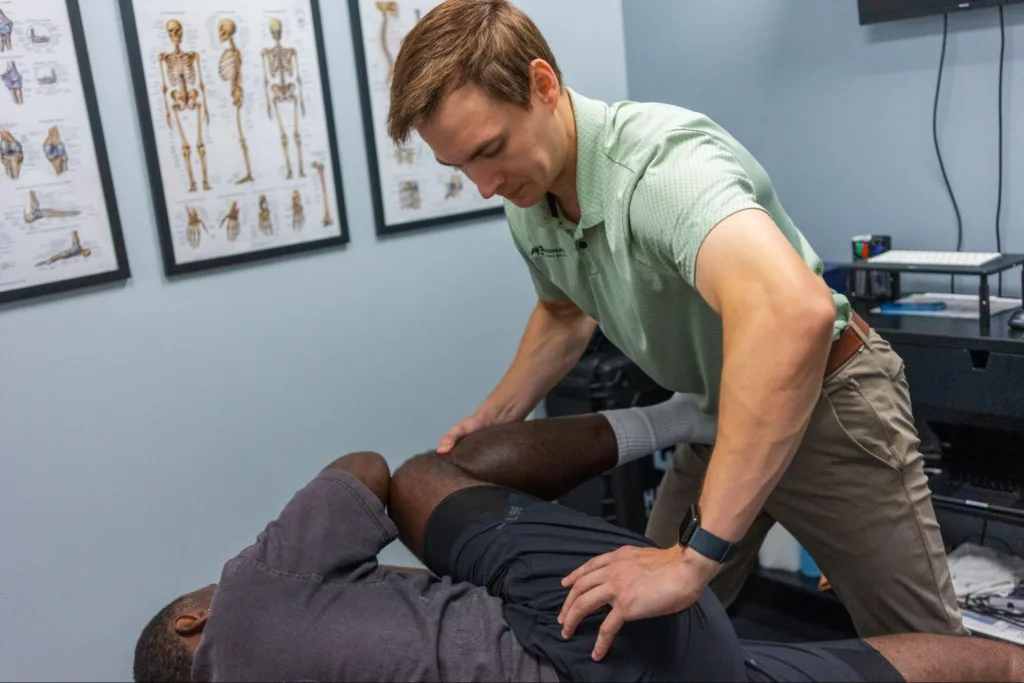
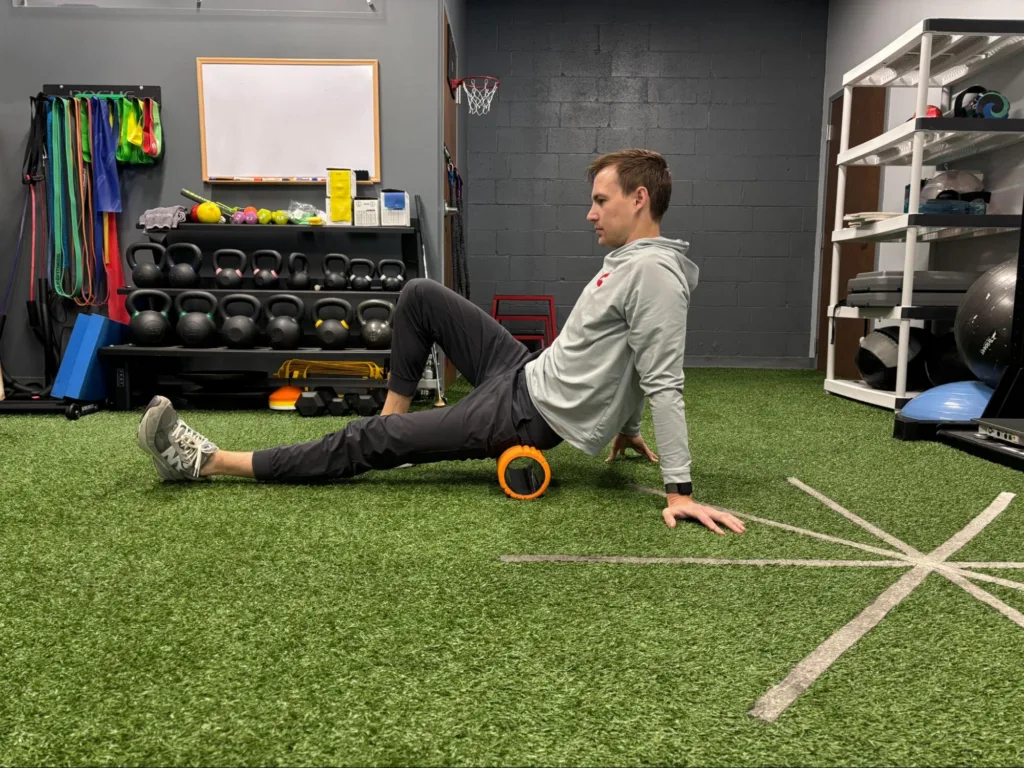
We would begin with soft tissue work around the hip and pelvis along with lumbar adjustments, when appropriate. The soft tissue work can be done by a professional (left picture), or the individual can use a foam roller or lacrosse ball (right picture).
Step 2: Move Through That Range
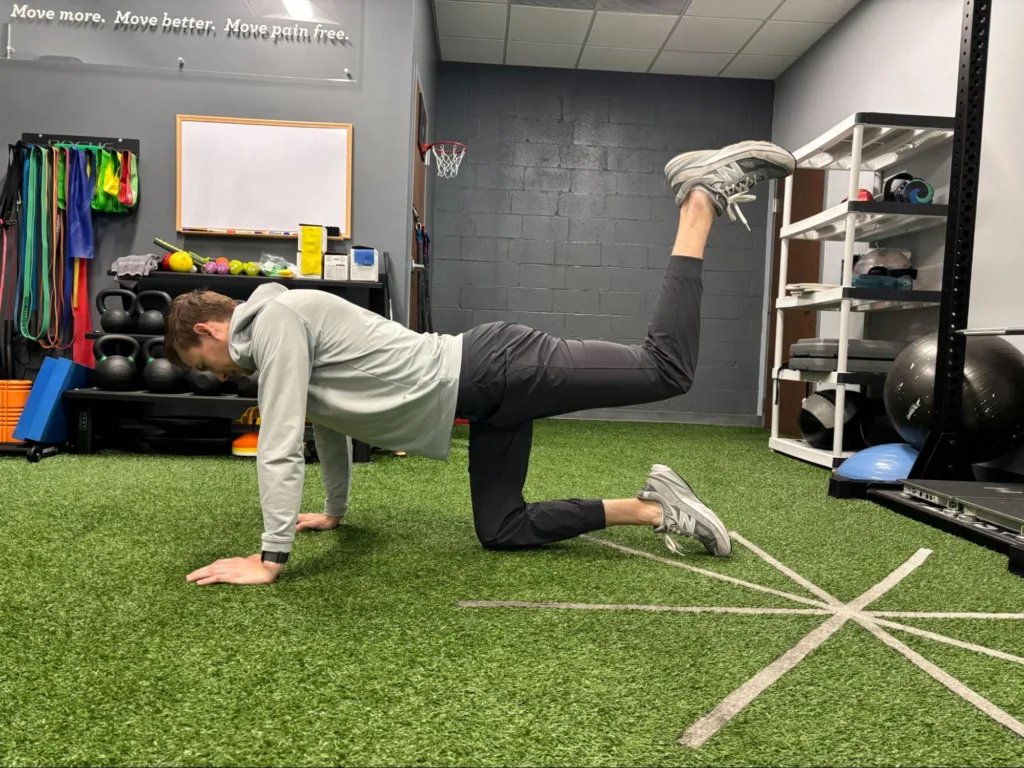
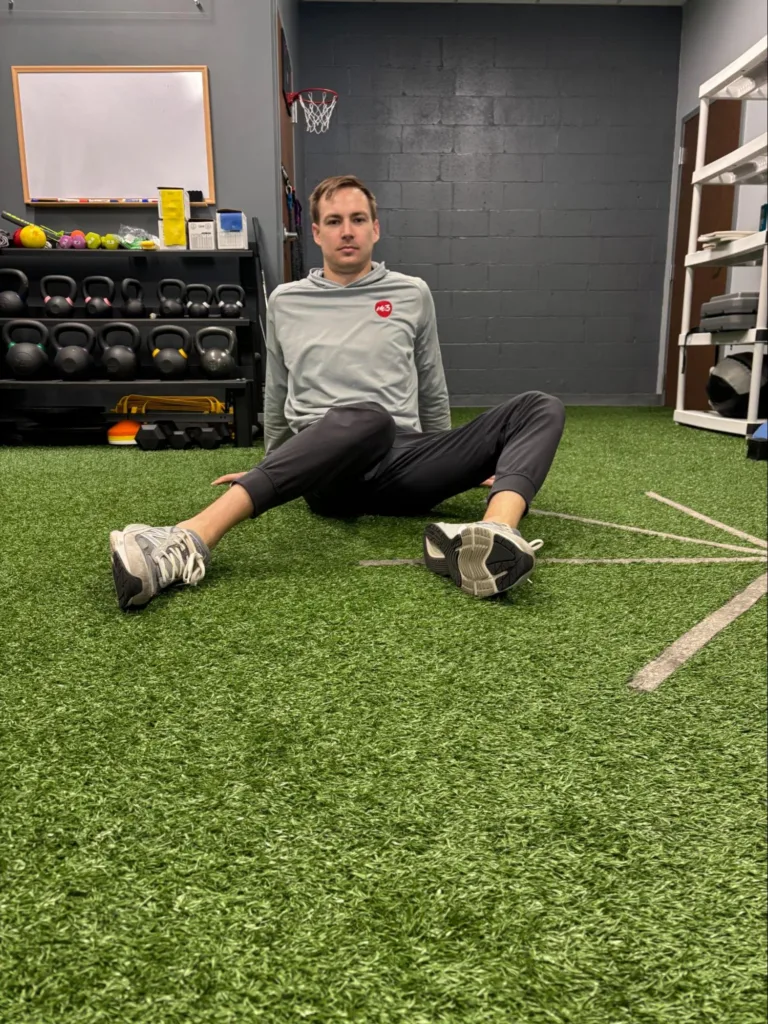
Next, the athlete needs to actively use it. Hip CARs (left picture) and controlled hip drops (right picture) can help the athlete move and explore their entire available range while developing greater awareness and control of the joint.
Step 3: Control and Load the New Range
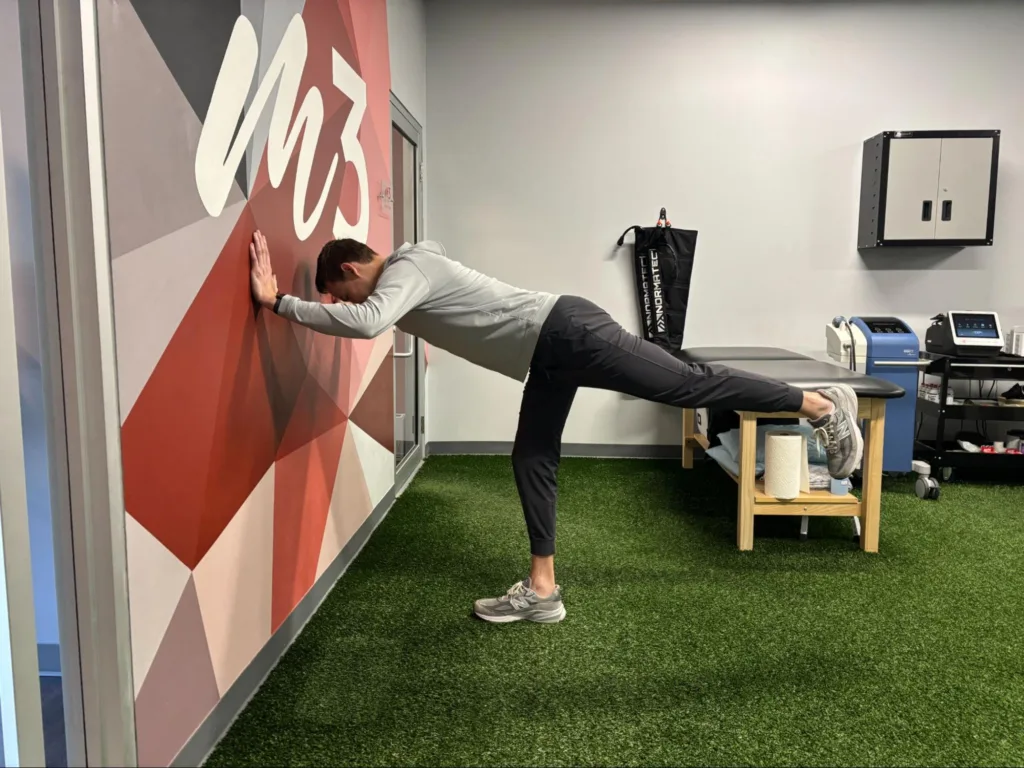
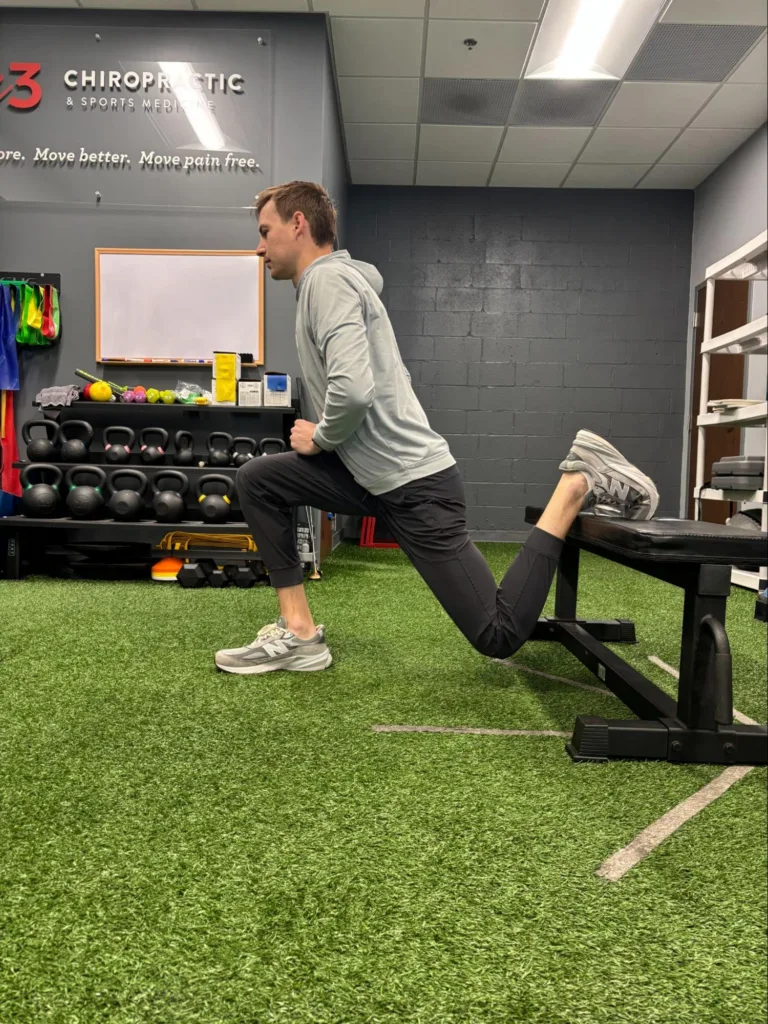
Being able to move farther into hip rotation or flexion does not necessarily mean the athlete has the strength to control that position. Wall airplanes (left picture) can challenge the athlete’s ability to control the hip through a larger range, while exercises such as Bulgarian split squats and Romanian deadlifts (right picture) can help build overall hip strength through a progressively loaded range of motion.
More Mobility Is Not Always the Answer
It is important to remember that more range of motion is not always the goal. A movement limitation does not automatically mean an athlete needs more mobility. In some cases, an athlete may already have sufficient range but lack the strength, stability, coordination, or motor control to use it effectively. Rather than continually stretching to gain more range, the focus may need to shift toward improving control and strength within the range they already have.
When Should You Get Evaluated?
If you are dealing with persistent pain, recurring injuries, or a movement limitation, the first step should be determining what is actually limiting your movement. A movement-focused evaluation can help identify whether the primary issue is mobility, strength, stability, motor control, training load, or another factor. Sometimes the solution is creating more range. Other times, the focus should be on getting stronger and more stable within the range you already have. If this sounds like you, consider getting evaluated by a healthcare provider who specializes in movement optimization to determine whether you need more mobility, more stability, or a combination of both.
At M3 Chiropractic & Sports Medicine, we look at movement as a whole rather than assuming every restriction needs to be stretched or adjusted. Our goal is to identify what is limiting your movement and develop a plan based on what your body actually needs.
References
- Mohr AR, Long BC, Goad CL. Effect of foam rolling and static stretching on passive hip-flexion range of motion. J Sport Rehabil. 2014 Nov;23(4):296-9. doi: 10.1123/jsr.2013-0025. Epub 2014 Jan 21. PMID: 24458506.
- Wilke J, Müller AL, Giesche F, Power G, Ahmedi H, Behm DG. Acute Effects of Foam Rolling on Range of Motion in Healthy Adults: A Systematic Review with Multilevel Meta-analysis. Sports Med. 2020 Feb;50(2):387-402. doi: 10.1007/s40279-019-01205-7. PMID: 31628662.
- Matsuo S, Takeuchi K, Nakamura M, Fukaya T, Oba K, Nakao G, Mizuno T. Acute Effects of Dynamic and Ballistic Stretching on Flexibility: A Systematic Review and Meta-analysis. J Sports Sci Med. 2025 Jun 1;24(2):463-474. doi: 10.52082/jssm.2025.463. PMID: 40469856; PMCID: PMC12131144.
- Head PL, Adkins SP, Brantley R, Modrall M. Comparison of Controlled Articular Rotations and Static Stretching on Hip Internal Rotation Range of Motion. Int J Exerc Sci. 2026 Jun 1;19(3):3005. doi: 10.70252/IJES2026305. PMID: 42517070; PMCID: PMC13405672.
- Afonso J, Ramirez-Campillo R, Moscão J, Rocha T, Zacca R, Martins A, Milheiro AA, Ferreira J, Sarmento H, Clemente FM. Strength Training versus Stretching for Improving Range of Motion: A Systematic Review and Meta-Analysis. Healthcare (Basel). 2021 Apr 7;9(4):427. doi: 10.3390/healthcare9040427. PMID: 33917036; PMCID: PMC8067745.